 Image 1 of 1
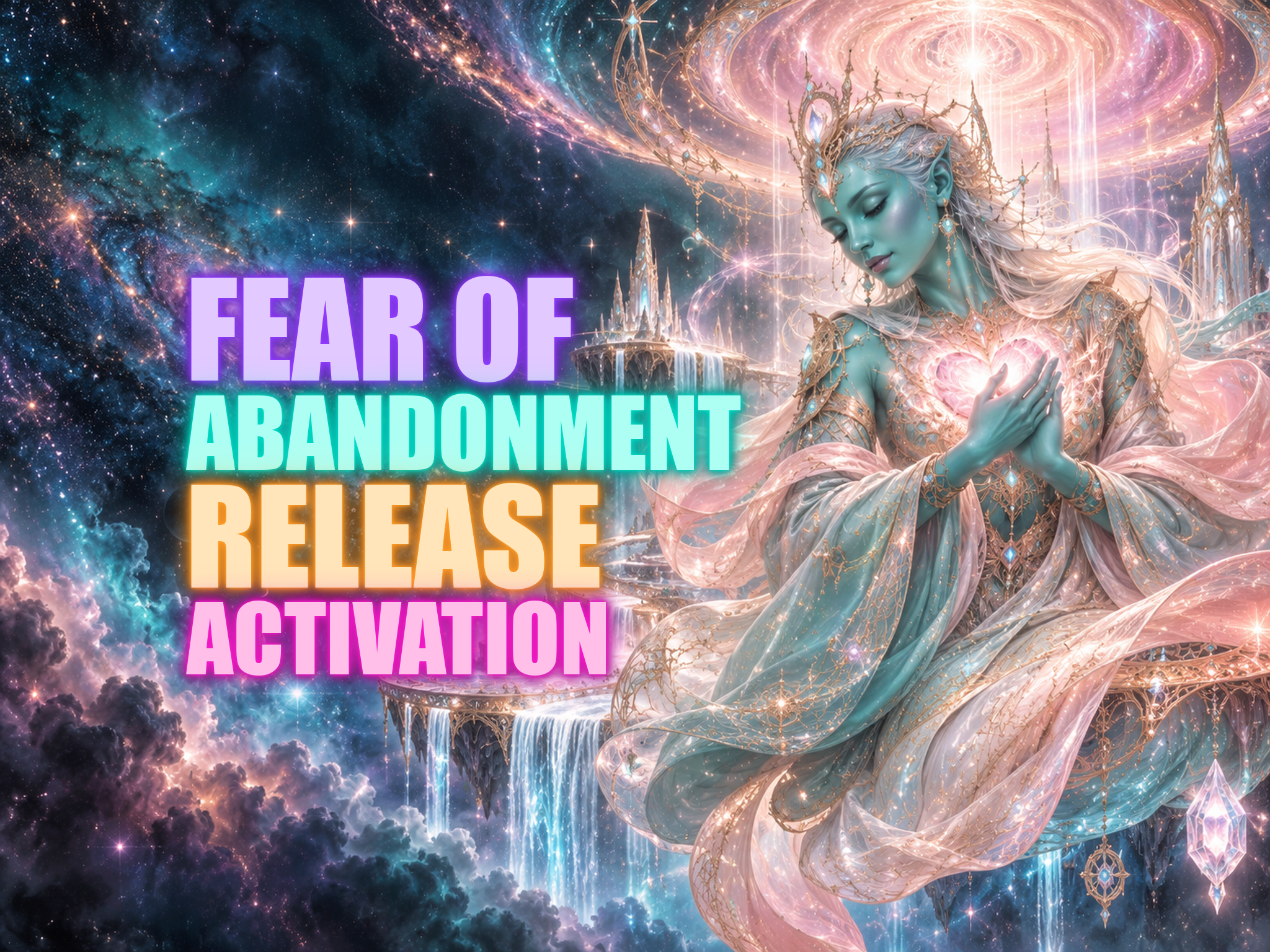
Fear of Abandonment Release Activation
Meet the fear of being left with compassion, steadier self-support and clear boundaries, while allowing relationships to remain freely chosen.
When a relationship feels important, the possibility of losing it can become difficult to hold. A change of plans, a quieter conversation or a request for space may feel much larger than the immediate event. This activation offers a spiritual focus for meeting that fear with compassion while examining what is actually happening. It does not promise that someone will stay, erase the possibility of loss or replace appropriate support for persistent emotional distress.
Imagine a steady golden centre surrounded by a soft, protective circle of rose light. The centre represents your continuing worth and capacity to seek care; the circle represents kindness towards the part of you that is afraid. The intention is to remain connected to yourself while relating to another person, so the wish for closeness does not require abandoning your needs, limits or freedom to choose.
The imagery and intentions described here form a spiritual approach to reflection and personal meaning. They are not a promise of a particular feeling, a way to establish what another person thinks or a substitute for practical communication. You remain free to take what resonates and leave what does not. Any relationship outcome depends on the people involved, their choices and the circumstances they are actually living in.
What This Activation Offers
Treating fear as an experience deserving care. Fear of being left can feel embarrassing or difficult to admit. This focus invites a gentler response to the feeling itself. You do not need to criticise yourself for wanting connection or reassurance. At the same time, the feeling does not decide what another person intends or what action you must take. The spiritual intention is to hold fear with enough compassion that it can be considered carefully, rather than immediately hidden, obeyed or used as evidence against yourself.
Distinguishing the present from a feared ending. A request for space or a delayed reply may carry several meanings. This intention asks what is known in the present and what belongs to an anticipated future. You may need clarification, or you may recognise a familiar expectation of loss arriving before there is enough information. Neither possibility should be assumed automatically. Sapphire imagery represents a clearer distinction between circumstances and predictions, helping you decide whether to ask a question, wait or respond to a genuine concern.
Reassurance that respects both people. It can be useful to explain what helps you feel considered, such as clear communication about plans or an agreed time to reconnect. This focus supports specific requests rather than demands for an impossible guarantee. Another person may be willing to offer reassurance while still needing independence and privacy. The intention is to let support have a realistic shape, with room for both people's needs. Reassurance is most sustainable when it is freely offered and does not become continual proof of loyalty.
Keeping your needs visible. Fear of losing someone can encourage excessive agreement or silence about things that matter. This part of the activation honours the fact that a relationship also needs to be suitable for you. You are allowed to name discomfort, ask for respect and notice when effort is not reciprocal. Keeping someone close at the cost of your own voice may not offer the security you hope for. The spiritual intention is to preserve self-respect within your desire for connection.
A circle of support beyond one relationship. No single person can provide every form of care, understanding or stability. This focus invites attention to the wider sources of support available or worth developing: trusted people, practical routines, interests and appropriate professional help where needed. Golden imagery represents several points of steadiness rather than one fragile thread. This is not a demand to become entirely self-sufficient. It is an invitation to recognise that receiving care can have more than one doorway in your life.
Boundaries when fear invites pursuit. When someone becomes less available, there may be an urge to send repeated messages, seek constant contact or abandon an expressed boundary. This intention makes room for a pause before acting on that urgency. Consider what the person has actually communicated and what response respects both of you. You can express a need clearly, but another adult's choices remain theirs. The spiritual focus is on caring for your feelings without turning fear into pressure, surveillance or a reason to disregard a no.
Trusting your capacity to respond to change. Security cannot always mean certainty that a relationship will continue unchanged. This focus explores another source of steadiness: the knowledge that you can seek support, make decisions and respond to difficult information as it arises. That does not make loss painless or easy. It allows your sense of possibility to extend beyond one feared outcome. The intention is to remember that your worth and entitlement to care continue through relationship changes, including circumstances you would not have chosen.
Integrating the Session
Choose a recent moment when fear of being left became strong. Write what happened, what you feared it meant and what would help you respond thoughtfully. A clear request may be appropriate, or the next step may be reaching out to a trusted person and allowing yourself time before contacting the partner again.
Name one commitment to yourself that remains valid regardless of another person's response. It could concern rest, a practical responsibility or time with someone supportive. Keep it modest and achievable. If these fears are intense, persistent or linked with distressing experiences, consider appropriate professional support. Spiritual reflection can accompany care, but it cannot guarantee emotional security or supply the practical help every situation may require.
There is no required sensation or dramatic sign to look for afterwards. You might notice a useful question, a preference you want to express or simply the wish to give a decision more time. Let any reflection remain connected to ordinary life. Small, freely chosen actions are a grounded way to explore the intention, and you are not failing the process if your experience is quiet, mixed or unchanged.
Key Intentions
- Meet fear of loss with compassion rather than self-criticism.
- Distinguish present information from a predicted relationship ending.
- Ask for realistic reassurance while respecting personal independence.
- Keep your needs and boundaries visible within important connections.
- Develop several sources of care, support and everyday steadiness.
- Pause before turning fear into repeated pursuit or pressure.
- Remember your continuing worth and capacity to seek help through change.
Let the wish to be loved remain compatible with staying present for yourself. This activation honours the part of you that longs for connection while inviting a steadier recognition that your dignity, choices and access to care do not depend on one person staying.
Your Remote Session
This is a personalised spiritual service performed remotely by Alexander Trueman. You do not need to attend a call or be in a particular place.
At checkout, provide the recipient's full name, date of birth and intentions. Your checkout email is used for order correspondence and your session report. If your basket includes sessions for different people, match each recipient and intention to the relevant session title.
Alexander personally schedules your session and confirms the timing by email after you order. Once the work is complete, he emails your personal session report. When several sessions are ordered, Alexander determines their timing and sequence. See How It Works & FAQ for more information.