 Image 1 of 1
Forgiveness Heart Peace Activation
Make room for a quieter heart without denying what happened, excusing harm or requiring a relationship to begin again.
Forgiveness is often presented as a simple decision, yet it can feel complicated when a hurt remains unresolved. You may want more peace while still needing recognition, accountability or distance. This activation offers a spiritual space for exploring that tension without making forgiveness a test of goodness or a condition you must meet before you deserve care.
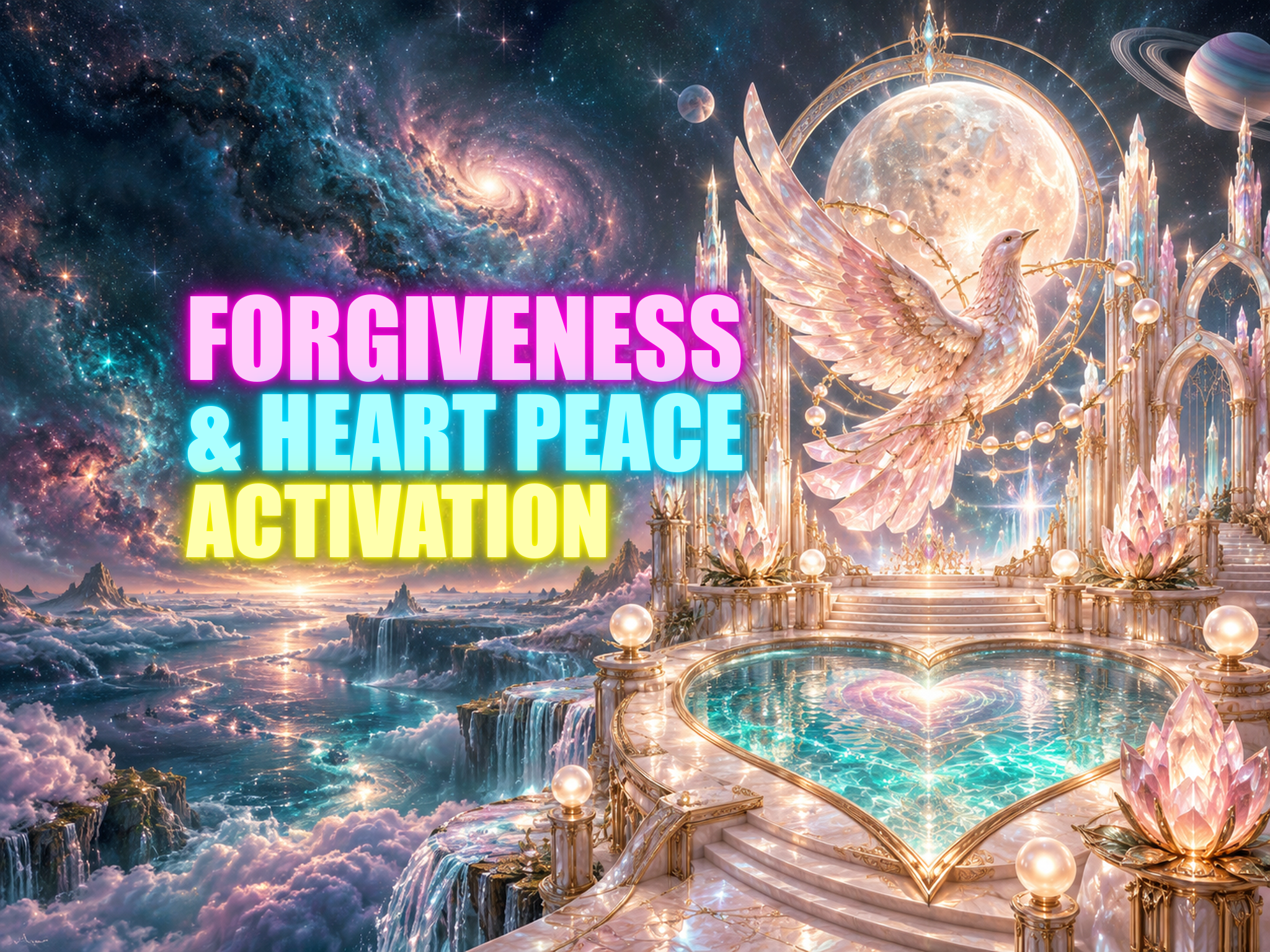
The imagery centres on a pearl bowl resting within warm rose light. The bowl represents room for the truth of your experience; the light represents compassion for the effort of carrying it. The intention is not to rewrite the past or declare an action acceptable. It is to consider whether there is any part of the ongoing burden you would like to relate to differently.
Forgiveness, reconciliation and renewed trust are separate possibilities. None is required by this session. A person may remain outside your life while you seek a less consuming relationship with what happened. Your boundaries, memories and judgement remain yours, and choosing not to forgive is not treated as a spiritual failure.
What This Activation Offers
Truth before spiritual language. Clear light within the pearl bowl symbolises honest acknowledgement. A wish for peace does not require describing harm as a lesson you should be grateful for or minimising its impact. This focus begins with what you recognise as true about the experience. You can name disappointment, anger or loss without needing to make the account more acceptable to someone else. The intention is a form of compassion that does not argue with reality. Your understanding may continue developing, but care is available before every detail has been resolved.
Resentment as information. A quiet amber light represents the part of resentment that points towards something important: a crossed boundary, an unfair burden or a need that went unheard. This focus invites listening to that information without requiring repeated rehearsal of the whole event. The question is not whether you are entitled to feel angry, but what the feeling asks you to protect now. A practical boundary or a clearer decision may be more useful than trying to force a generous feeling towards someone whose behaviour has not changed.
Release without erasing memory. The image of setting down a heavy object symbolises a change in how you carry a story, rather than its disappearance. Remembering what happened can remain important. The intention is to explore whether constant mental return is still serving your present needs. You may be ready to release one argument, one imagined conversation or one demand for an answer that is unlikely to arrive. A limited release is allowed. You do not have to declare the whole matter complete in order to create a little more room around it.
Boundaries remain available. A golden edge around the bowl represents the protection of present choices. Forgiveness does not give another person automatic access to you, require renewed contact or remove the need for accountability. This focus honours the distinction between personal peace and relationship repair. Repair, where wanted, involves real behaviour and willing participation. Distance may be the appropriate choice. The spiritual invitation is to let your boundaries be guided by your circumstances and judgement, rather than by pressure to demonstrate that you have become sufficiently loving or evolved.
Compassion for the unfinished heart. Rose light offers an image for meeting yourself when feelings return. A calm day followed by an angry one does not mean you have undone everything. This focus makes room for an uneven experience without demanding that you repeatedly announce a final decision about forgiveness. You can care for the part of you that remains hurt while recognising the part that wants freedom from constant preoccupation. Both wishes can be understandable. The intention is patience with your own complexity rather than another obligation to handle pain perfectly.
Peace directed towards your life. A small golden opening symbolises attention becoming available for the present. Peace may involve sleep, ordinary enjoyment, a conversation unrelated to the hurt or a decision no longer organised around proving a point. This focus asks what you would like your energy and time to serve now. It does not depend on another person apologising or understanding your perspective. Their accountability remains their responsibility. Your wish for a fuller life can have value in its own right, without being used to excuse what happened or declare the past unimportant.
Integrating the Session
You might write two separate statements: what you are not willing to minimise, and what you no longer wish to rehearse as often. Keeping these distinct can help prevent release from feeling like betrayal of your own experience.
Choose an intention that is honest today. It may be “I want one evening without revisiting the argument” rather than “I forgive everything.” If contact is unsafe or unwanted, there is no need to initiate it. Appropriate professional or practical support can help with circumstances that spiritual reflection alone cannot address. Let personal peace remain a possibility you explore, not a duty imposed on the part of you that was hurt.
The imagery in this activation provides a spiritual language for reflection. You do not need to visualise perfectly, feel a particular sensation or agree with every metaphor. Take what feels meaningful and let the rest remain optional. A quiet response is not a failure, and an intense response is not proof of a particular result. There is no required emotional performance. Your understanding of the experience can remain personal, open and grounded in the life you actually live.
Choose a manageable intention rather than trying to change everything at once. Notice where an idea becomes useful in an ordinary conversation, a moment of self-talk or a decision about your time. If a practice feels forced, you may simplify it or leave it aside. Your pace matters. Spiritual reflection can sit beside practical support and honest communication; it does not replace another person’s freely made choices, your own judgement or appropriate professional care when that is needed.
Key Intentions
- Honour the truth of your experience without spiritual minimisation.
- Recognise what anger and resentment may ask you to protect.
- Explore release without demanding that memories or feelings disappear.
- Keep forgiveness separate from reconciliation and renewed trust.
- Retain boundaries, privacy and your right to decline contact.
- Meet returning feelings with patience rather than self-judgement.
- Direct more attention towards the life you want to live.
- Choose an honest intention without pressure to forgive before ready.
Your Remote Session
This is a personalised spiritual service performed remotely by Alexander Trueman. You do not need to attend a call or be in a particular place.
At checkout, provide the recipient's full name, date of birth and intentions. Your checkout email is used for order correspondence and your session report. If your basket includes sessions for different people, match each recipient and intention to the relevant session title.
Alexander personally schedules your session and confirms the timing by email after you order. Once the work is complete, he emails your personal session report. When several sessions are ordered, Alexander determines their timing and sequence. See How It Works & FAQ for more information.