 Image 1 of 1
Giving Receiving Love Balance Activation
Explore a more balanced exchange of care, where generosity remains freely offered and receiving does not need to become a debt.
Love can become tiring when you are always the one noticing, organising, reassuring or making room. It can also feel uncomfortable when someone offers care and you do not know how to receive it. This activation explores the relationship between giving and receiving, with a spiritual focus on reciprocity that is honest rather than rigidly equal at every moment.
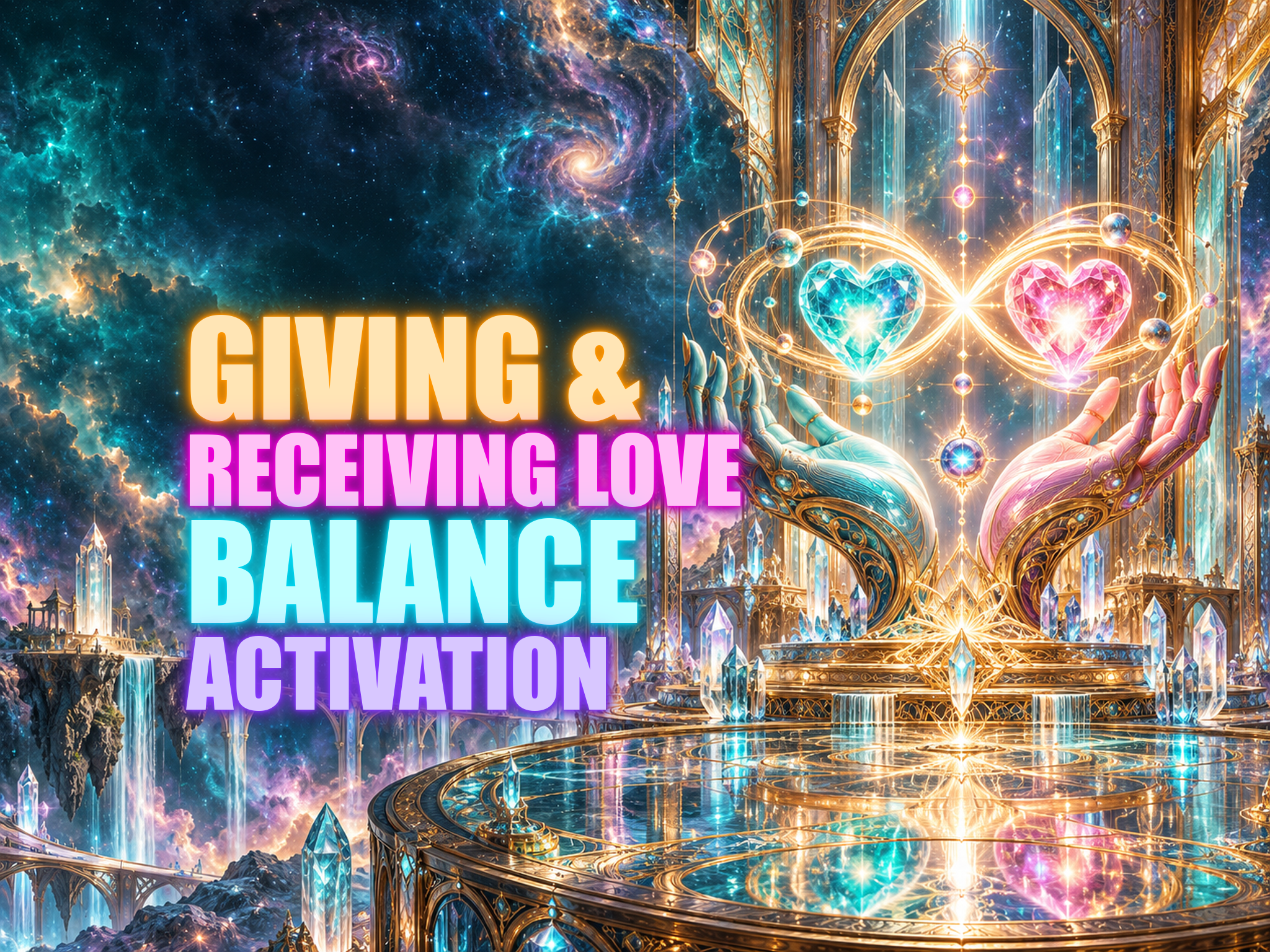
The central image is a pair of golden bowls connected by a gentle rose-coloured current. Each bowl has its own shape and capacity. The image represents exchange that allows difference, changing circumstances and clear limits. It does not suggest that affection can be measured precisely or that another person must return every gesture in the same form.
This session may resonate if giving has become a way to secure belonging, if resentment grows around needs you have not expressed or if accepting help feels harder than providing it. The intention is to make both sides of care more conscious, so generosity can remain connected to willingness rather than fear or obligation.
What This Activation Offers
Recognising the purpose behind giving. The first golden bowl invites attention to what motivates an offer of care. Generosity may come from affection, enjoyment, habit, anxiety or a hope that someone will finally choose you. Several motives can exist together. This focus does not condemn them; it asks for honest recognition. If you know what you are hoping for, you can decide whether a gift is truly something you wish to give freely. The intention is to bring clarity to the moment before overextension, rather than waiting until disappointment turns into resentment.
Capacity deserves a voice. A clear rim around each bowl symbolises limits of time, energy and availability. Caring about someone does not make your capacity unlimited. This focus invites attention to what you can offer without repeatedly neglecting yourself. A smaller, sincere gesture may be more sustainable than a large promise made under pressure. The intention allows limits to be communicated before exhaustion or withdrawal becomes the only way to express them. Other people’s capacity also deserves respect, even when their limit is different from the answer you hoped to receive.
Receiving without keeping score. Rose light in the second bowl represents willingness to let support reach you. If every act of kindness creates an immediate obligation, receiving can feel like work rather than care. This focus distinguishes gratitude from anxious accounting. Relationships may be reciprocal over time without matching each exchange precisely. One person may have more to give during a difficult season. The intention is to recognise the wider pattern while letting a freely offered gesture exist for a moment, rather than rushing to cancel its meaning through instant repayment.
Unspoken expectations brought into view. A clear bridge between the bowls symbolises conversations about what has been assumed. You may expect a person to recognise a need because you would notice it in them. They may understand care differently or be unaware of the imbalance you experience. This focus invites a move from silent testing towards clearer requests. Asking does not guarantee agreement, but it provides more useful information than waiting for someone to read your mind. The intention is to make expectations available for discussion before they become a private measure of love.
Different forms of reciprocity. The two distinct bowls represent people who may contribute in different ways. Practical reliability, emotional attention, initiative, humour and shared responsibility can all matter. This focus invites a broad but honest view of the exchange. Difference need not mean unfairness, yet difference should not become an excuse for one person carrying everything. The intention is to look at what is actually happening and whether both people feel able to participate willingly. A relationship’s pattern can be considered without reducing it to either a transaction or a romantic ideal.
Care that includes you. A golden centre between giving and receiving symbolises your place within the relationship rather than outside it as a constant provider. Your preferences, comfort and need for support belong in the picture. This focus invites permission to pause before automatically volunteering, to accept a reasonable offer and to notice whether you feel able to say no. The intention is sustainable care. Generosity can become more meaningful when it is chosen, and receiving can feel more natural when you do not regard your needs as an inconvenience to be hidden.
Integrating the Session
Notice one recurring exchange where you give more than you comfortably can. Ask what you are hoping the gesture will communicate or secure. You may decide to continue, reduce the commitment or express a need directly. Any of these can be thoughtful when chosen honestly.
When someone offers help, consider whether it would be useful before automatically refusing. A clear yes, no or alternative suggestion can support a more open exchange. Look at the relationship’s pattern over time rather than counting every small gesture. If the imbalance remains substantial despite communication, your limits and decisions deserve attention. The session does not require you to keep giving until another person becomes reciprocal.
The imagery in this activation provides a spiritual language for reflection. You do not need to visualise perfectly, feel a particular sensation or agree with every metaphor. Take what feels meaningful and let the rest remain optional. A quiet response is not a failure, and an intense response is not proof of a particular result. There is no required emotional performance. Your understanding of the experience can remain personal, open and grounded in the life you actually live.
Choose a manageable intention rather than trying to change everything at once. Notice where an idea becomes useful in an ordinary conversation, a moment of self-talk or a decision about your time. If a practice feels forced, you may simplify it or leave it aside. Your pace matters. Spiritual reflection can sit beside practical support and honest communication; it does not replace another person’s freely made choices, your own judgement or appropriate professional care when that is needed.
Key Intentions
- Notice the motives and hopes that accompany your generosity.
- Recognise capacity before giving becomes repeated personal overextension.
- Receive support without turning every kindness into immediate debt.
- Express needs instead of relying on unspoken tests or expectations.
- Appreciate different contributions while remaining honest about unfair patterns.
- Include your preferences and limits within the exchange of care.
- Let gratitude, generosity and boundaries coexist without rigid scorekeeping.
- Choose relationships where participation can remain freely reciprocal.
Your Remote Session
This is a personalised spiritual service performed remotely by Alexander Trueman. You do not need to attend a call or be in a particular place.
At checkout, provide the recipient's full name, date of birth and intentions. Your checkout email is used for order correspondence and your session report. If your basket includes sessions for different people, match each recipient and intention to the relevant session title.
Alexander personally schedules your session and confirms the timing by email after you order. Once the work is complete, he emails your personal session report. When several sessions are ordered, Alexander determines their timing and sequence. See How It Works & FAQ for more information.